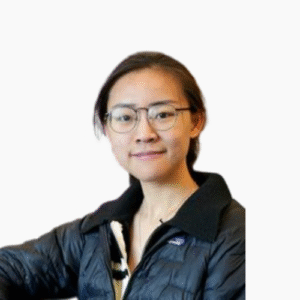
Kejia Wu
Post Doc, Baker Lab, Institute for Protein Design Washington University School of Medicine in St. Louis
Kejia Wu is a Postdoctoral Researcher in the Baker Lab at the Institute for Protein Design, University of Washington, where she develops methods to design and characterize binders for peptides and intrinsically disordered regions. Her work focuses on capturing transient, weak, and highly dynamic interactions, and on functionalizing designed binders to probe complex biological mechanisms. Kejia has contributed to high-impact publications advancing binder design for disordered targets and expanding the toolkit for studying structural ensembles. At the Summit, she will discuss biophysical strategies for characterizing IDPs and interpreting data when no single static structure exists.
Seminars
- Why IDRs have resisted drug discovery: How conformational heterogeneity, short linear motifs, and phase-separation biology place IDPs at the center of disease, yet beyond the reach of traditional modalities
- A new design paradigm for disordered targets: Deep-learning–enabled de novo binders and proteases that selectively recognize short (≥8 aa) and PTM-defined motifs within IDRs, achieving high affinity and specificity
- What programmable control unlocks: Case studies across oncology, neurodegeneration, and viral targets demonstrating inhibition, relocalization, and catalytic cleavage as new therapeutic mechanisms
Artificial intelligence and machine learning are transforming the way biophysical data is generated, interpreted, and applied. But beyond the day-to-day integration of AI into experimental workflows, what are the broader opportunities, challenges, and limitations?
This interactive panel brings together leading experimentalists, computational biophysicists, and AI specialists to explore the bigger picture and provides you the opportunity to have honest conversations with your industry colleagues about hype vs. value.
Key Discussion Themes:
- Where can AI add true value in biophysics beyond data processing? Predictive modelling, hit triaging, protein design?
- Which areas of drug discovery are most ready for AI adoption and where should caution succeed?
- The challenges of AI adoption including data curation, standardization, reproducibility, interpretability, and integration with lab workflows
- The evolving role of experimental validation alongside AI predictions, how to ensure we maintain scientific rigor
Blue Sky Thinking & Audience Feedback: In 5 years, what do you hope AI/ML has enabled / transformed the way you do something?